I use AI to accelerate
the thinking.
Not replace it.
Most organisations use AI to automate tasks. I use it as an accelerant for thinking — and for the kind of change that actually sticks. It's not about the tools. It's about using AI to help you think faster, decide better, and change more deliberately. Every talk, workshop and programme I deliver has this running underneath it.
How an AI-powered talk works
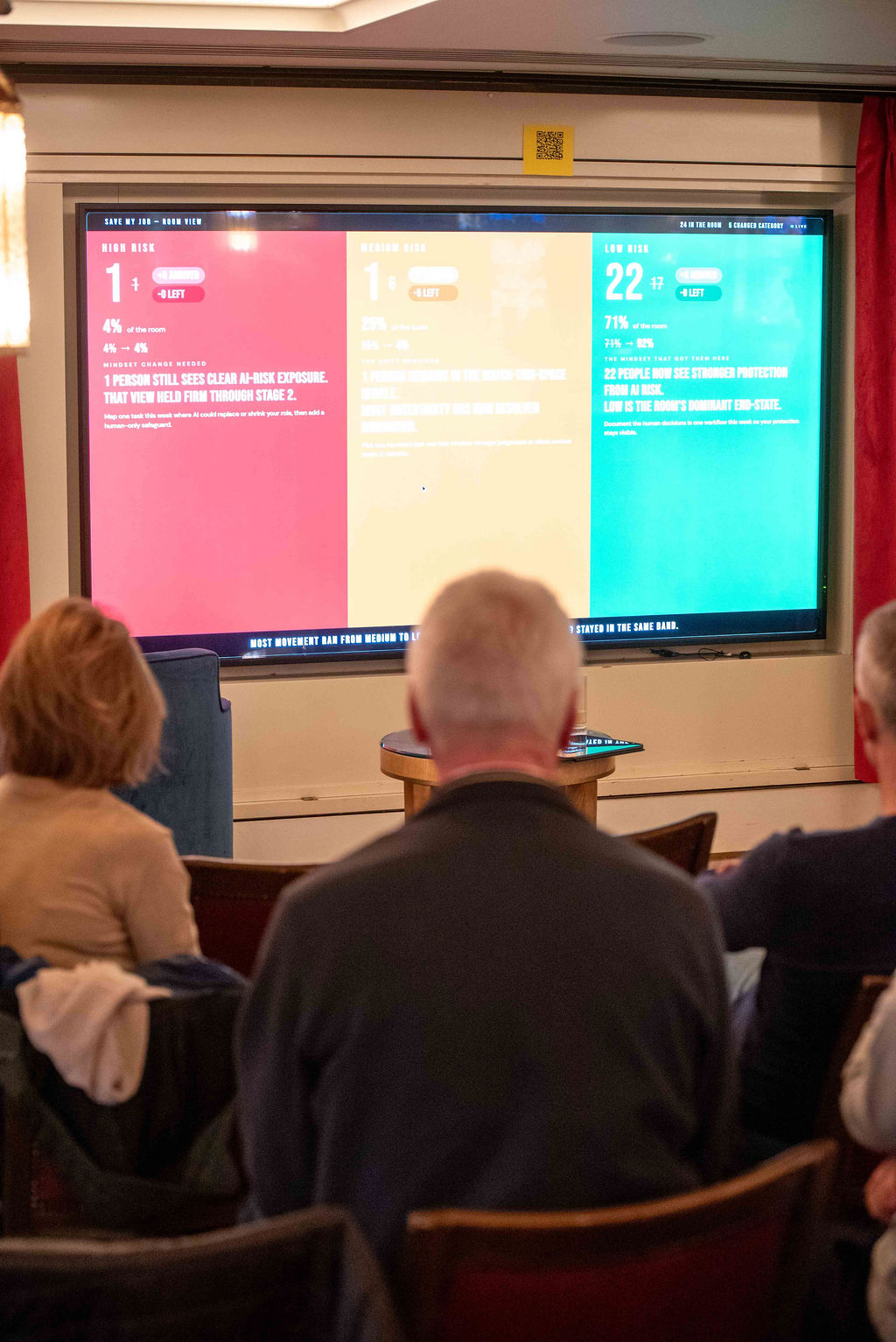
Every Heartshaped session is AI-powered. Your people contribute live input, AI helps analyse and aggregate the room, and the output comes back as individual insight, group patterns and practical next steps.
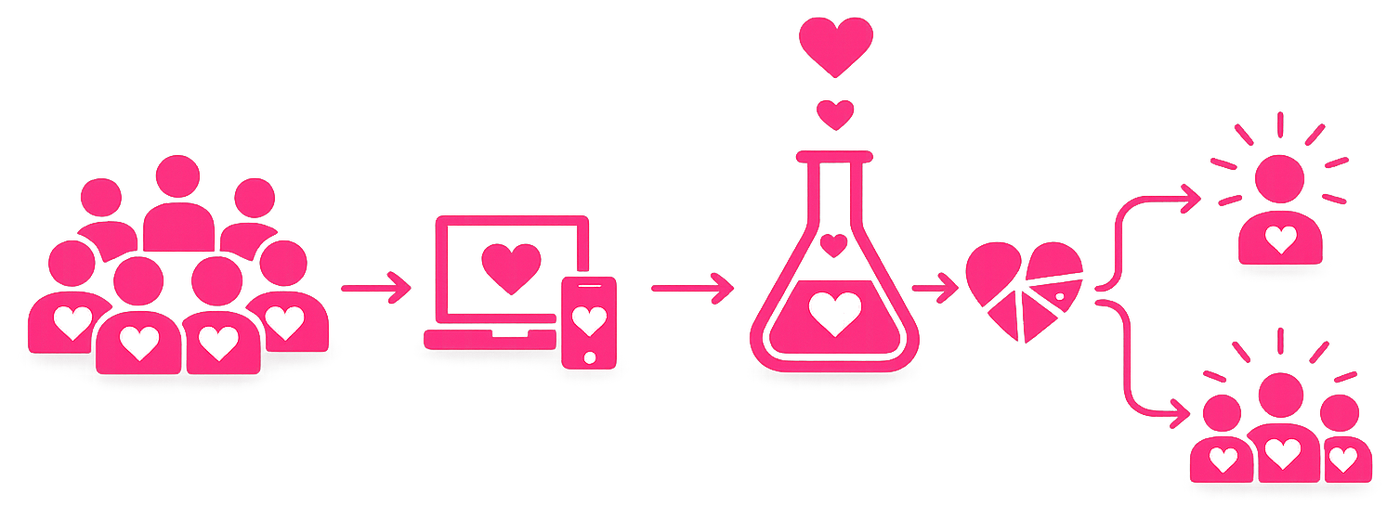
Live input from the room
AI-assisted analysis and reasoning
Practical insights and decisions as takeaways
Some people just teach the tools. We teach better thinking too.
 The five steps
From insight to
real decisions.
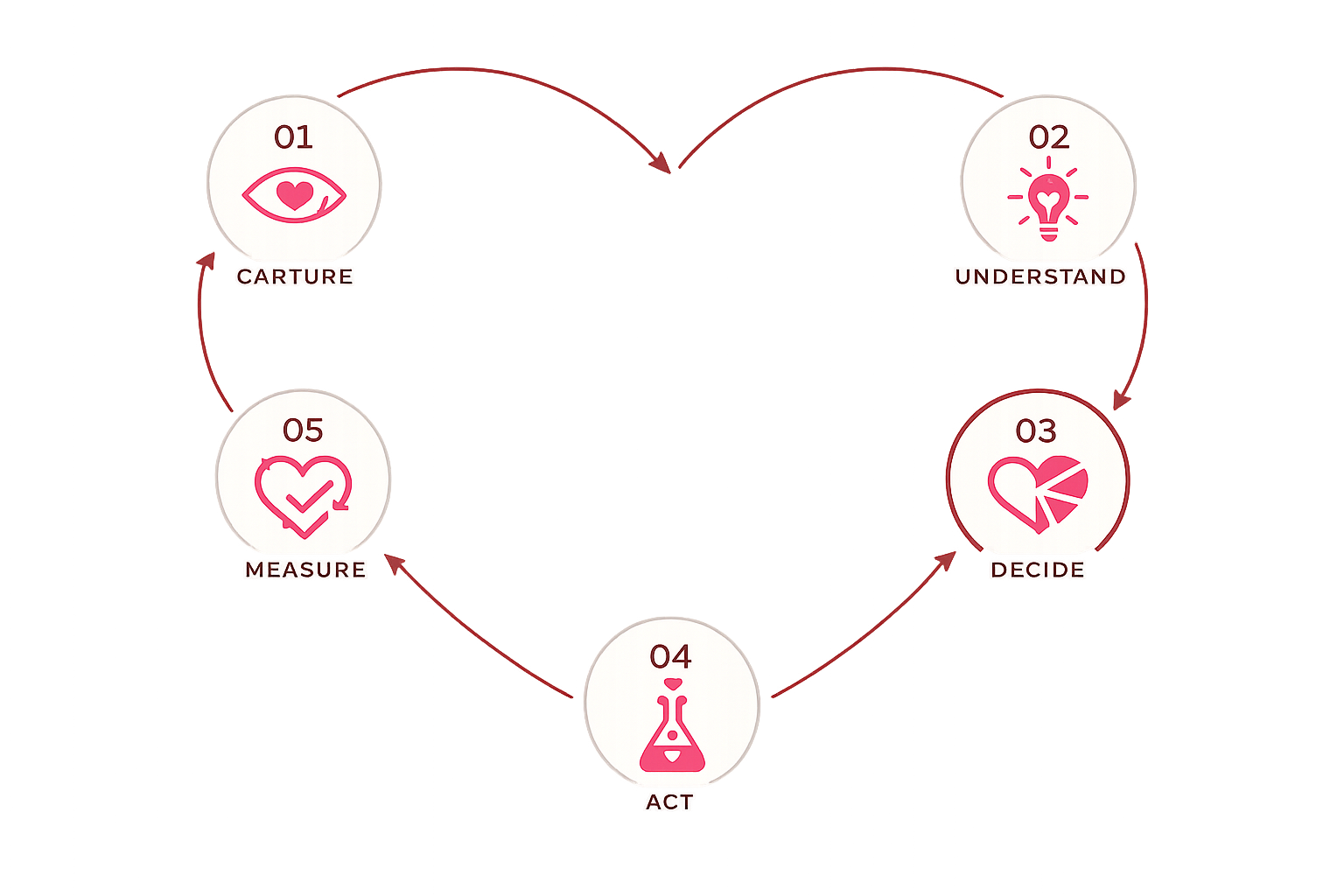
These aren't abstract stages. They're what I actually do — in every room, at every stage of preparation, and in how your team moves from raw thinking to action. AI runs through all of them.
|
What your people get
Capability built Behaviour, thinking and practical skills — mapped to each programme |
The Human Dividend
“Save My Job from AI” |
Judgement Advantage
“Stop Messing Around with AI” |
AI Surgery
“Bring Me a Problem” |
|---|---|---|---|
| Behaviour | |||
| Adaptability to AI-driven change | |||
| Curiosity and willingness to experiment | |||
| Confidence under uncertainty | |||
| Resilience when things don't work first time | |||
| Decision ownership and accountability | |||
| Intellectual humility — knowing what you don't know | |||
| Learning agility — updating beliefs when evidence changes | |||
| Thinking | |||
| Diagnosing the real problem beneath the presented one | |||
| Judgement — knowing when and what to decide | |||
| Critical evaluation of AI-generated output | |||
| Problem framing — setting AI up to genuinely help | |||
| Strategic thinking — seeing the bigger picture | |||
| Assumption testing — questioning what you take for granted | |||
| Structured reasoning — thinking in steps, not instincts | |||
| Risk awareness — seeing what could go wrong before it does | |||
| Practical | |||
| Prompting — getting better AI outputs, reliably | |||
| Context creation — briefing AI so it actually understands | |||
| Task decomposition — breaking complex work into AI-ready parts | |||
| Building reusable AI workflows for real tasks | |||
| Shipping a working AI solution end-to-end — from problem to adopted system | |||
| Evaluating and editing AI output before it goes anywhere | |||
| Human value mapping — plotting where people add irreplaceable value | |||
| Role redesign — rebuilding work around human and AI strengths | |||
| Decision mapping — structuring when and how decisions get made | |||
| Identifying bias and gaps in AI-generated analysis | |||
Want to see it
in the room?